
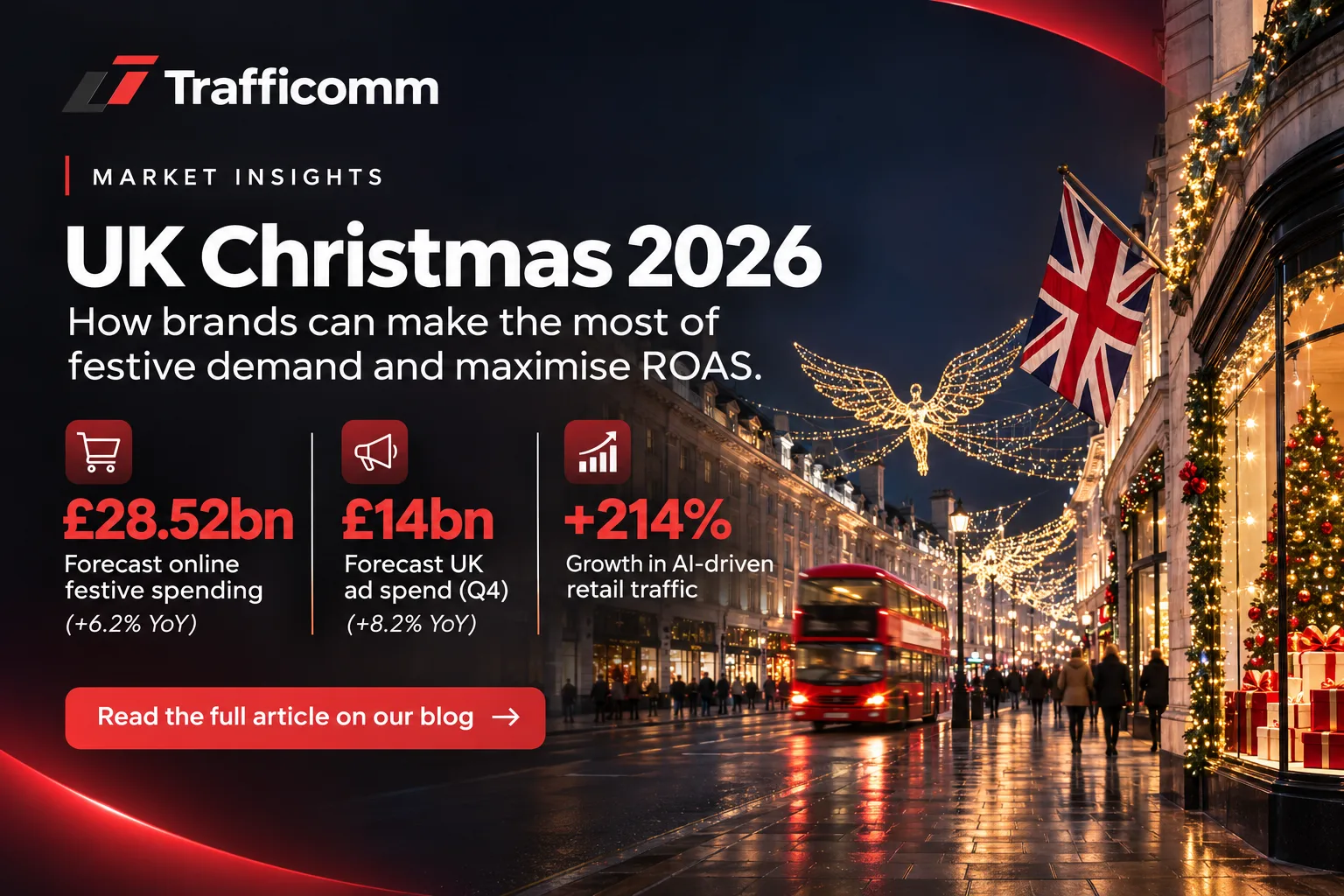
Christmas 2026: How UK Brands Can Make the Most of Festive Demand.
Explore how UK brands can capitalise on Christmas 2026 through smarter media planning, changing consumer behaviour, campaign optimisation and a stronger focus on profitable advertising returns.
Christmas 2026: How UK Brands Can Make the Most of Festive Demand
By Trafficomm Insights | 26 November 2026
Christmas has always been an important period for UK advertisers. But the way consumers shop, discover products and make purchasing decisions is changing.
For brands, the opportunity extends well beyond traditional Christmas shopping. Black Friday, Cyber Monday, last-minute gifting, Boxing Day and the January sales have effectively created several distinct trading periods, each with its own consumer behaviour and advertising challenges.
With December approaching, it's worth looking at what the latest market research tells us and, more importantly, what brands can do with that information.
A growing market, but a more competitive one
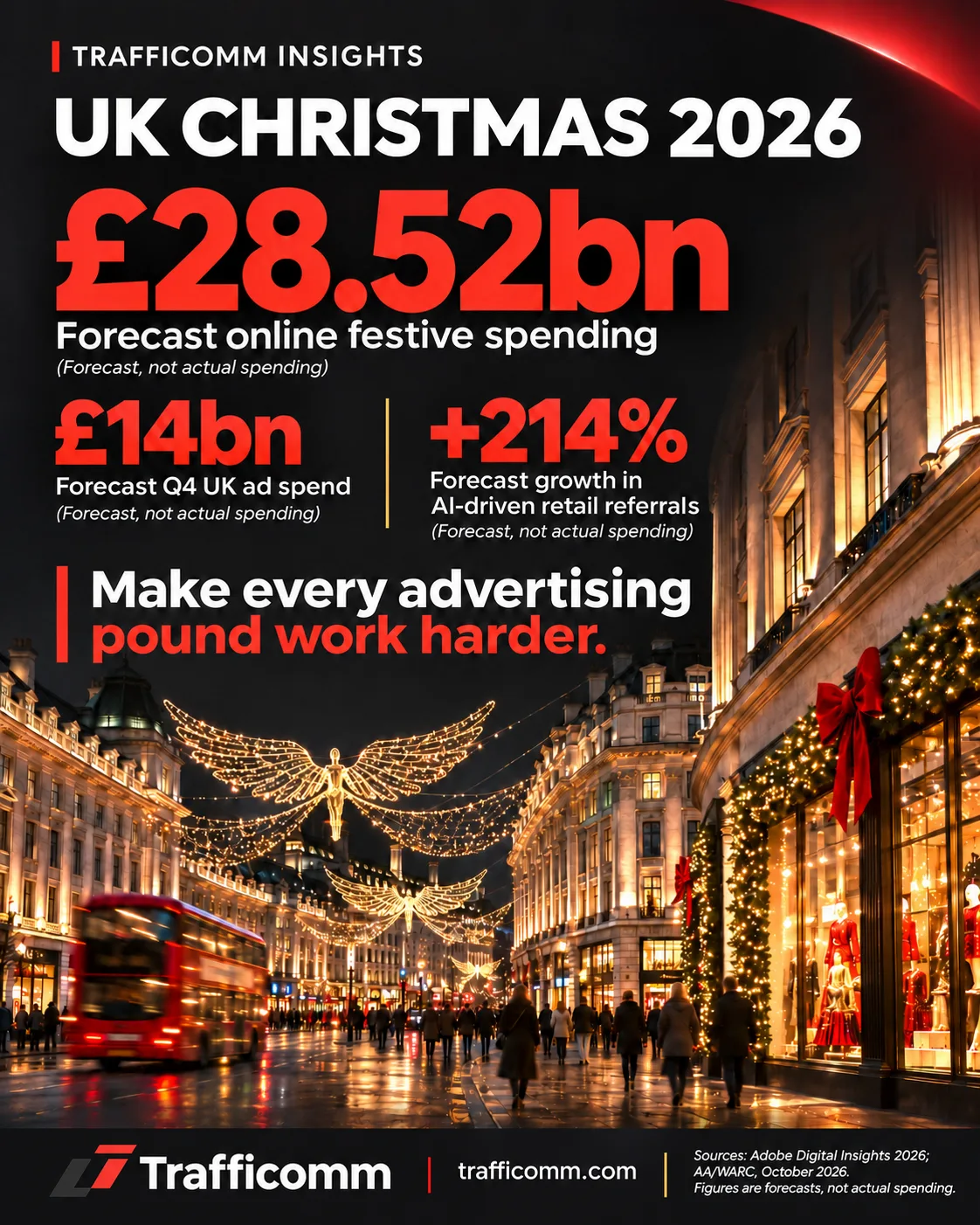
According to Adobe Digital Insights, UK online spending during November and December 2026 is expected to reach £28.52 billion, representing growth of 6.2% compared with last year.
Cyber Weekend alone is forecast to generate £4.05 billion in online sales.
At the same time, the Advertising Association and WARC expect UK advertising expenditure to reach £14 billion in the fourth quarter of 2026, an increase of 8.2% year-on-year.
These are encouraging figures, but they also highlight an important challenge. While consumers are expected to spend more, advertisers are investing more to reach them.
In a competitive auction-based advertising environment, this can put pressure on customer acquisition costs. Brands that enter the festive period without a clear performance strategy may find themselves generating additional revenue without necessarily improving profitability.
The Christmas shopper is becoming more selective
One of the more interesting findings from this year's consumer research is the continued importance of price.
According to Sensormatic Solutions' UK shopper research, 63% of consumers consider price their leading consideration when purchasing Christmas gifts.
Consumers are willing to shop, but they want to feel confident that they are getting good value.
For brands, this doesn't necessarily mean offering the biggest discount. A well-presented gift bundle, free delivery, convenient returns or a genuinely useful product recommendation can sometimes be more persuasive than a generic promotional message.
A beauty brand, for example, could create gift collections at different price points. An electronics retailer could promote bundles rather than discounting individual products. A fashion brand could build campaigns around festive occasions rather than simply advertising its entire catalogue.
The opportunity is to make the purchasing decision easier for the customer without unnecessarily reducing margins.
December should not be treated as one campaign
Consumer priorities change considerably as Christmas approaches.
During Black Friday and Cyber Monday, the focus is largely on finding a good deal. In early December, consumers are actively looking for gifts and comparing options. By the final week before Christmas, delivery becomes a major consideration.
Someone shopping on 5 December may be interested in discovering the perfect gift. Someone shopping on 22 December is more likely to be asking whether it will arrive on time.
That difference should be reflected in advertising creative, landing pages and media strategy.
In the first half of December, brands can focus on gift guides, product demonstrations, festive collections and customer reviews. As delivery deadlines approach, the messaging should become more practical, highlighting confirmed delivery dates, click-and-collect options, local stock availability and digital gift cards.
Once Christmas Day has passed, the focus changes again. Consumers begin looking for products for themselves, spending gift cards and exploring seasonal reductions.
Having separate campaigns prepared for these buying moments gives marketing teams greater flexibility than relying on a single Christmas campaign throughout the month.
Getting the media mix right
There is no universal media plan that works for every brand during Christmas.
The right approach depends on the product, audience, available budget, historical campaign performance and the length of the customer decision-making process.
Google Search and Shopping remain particularly relevant for retailers looking to capture existing purchase intent. Consumers searching for specific products, gift ideas or delivery options are often closer to making a decision.
Social platforms such as Instagram, Facebook and TikTok play a different role. They allow brands to introduce products, generate interest and influence purchasing decisions through engaging visual content.
Short product demonstrations, customer testimonials, gift recommendations and creator-led videos can be useful during a period when consumers are actively looking for inspiration.
Retail media also deserves consideration, particularly for brands selling through marketplaces and major retail partners. Reaching consumers within an environment where they are already shopping can complement broader awareness and acquisition campaigns.
For larger advertisers, programmatic display, online video and connected television can help build awareness and consideration ahead of important sales periods.
The important thing is to understand how these channels work together rather than expecting every platform to deliver the same type of result.
A high ROAS does not always mean a profitable campaign
During peak trading periods, marketing teams often focus heavily on return on advertising spend, or ROAS.
While it is an important measurement, it needs to be understood in the context of the wider business.
Consider two products generating the same sales revenue from advertising. One has a healthy contribution margin, while the other has been heavily discounted and carries higher delivery and return costs.
Although both campaigns might report the same ROAS, their actual contribution to the business could be very different.
For example, a retailer with a 40% contribution margin before advertising would need a minimum ROAS of 2.5x to cover its advertising costs.
If that margin falls to 25% during a promotional period, the break-even ROAS increases to 4x.
This is why marketing teams should work closely with their commercial and finance teams during Christmas. Advertising budgets should reflect product margins, stock availability, fulfilment costs and expected returns, rather than simply prioritising products generating the highest revenue.
It is also worth separating new-customer acquisition from existing-customer sales. A campaign that generates a slightly lower immediate ROAS but acquires valuable new customers may deliver stronger long-term commercial results.
Ultimately, the objective should be profitable growth, not simply an impressive number on an advertising dashboard.
AI is becoming part of the shopping journey
Another development worth watching this Christmas is the growing influence of artificial intelligence on product discovery.
Adobe forecasts that traffic to UK retail websites from generative AI platforms will increase by 214% year-on-year during the 2026 festive period.
Although AI-driven referrals are still a developing acquisition channel, this growth suggests a change in how consumers research and compare products.
Rather than visiting several websites independently, shoppers can increasingly ask AI assistants to recommend gifts within a specific budget, compare product features or identify suitable alternatives.
This creates an additional consideration for brands.
Product descriptions need to be clear and informative. Pricing and availability should be accurate. Gift guides, frequently asked questions, customer reviews and structured product data can all help make product information easier to discover and understand.
Traditional SEO remains important, but brands should also begin considering how their products and content appear within AI-powered search and recommendation experiences.
Don't underestimate the importance of the customer journey
A significant amount of advertising investment can be wasted after a customer clicks on an advertisement.
A slow mobile website, an unexpected delivery charge, an unavailable product or a complicated checkout process can quickly undo the work of an otherwise effective campaign.
This becomes particularly important during Christmas, when consumers are shopping under time pressure and have plenty of alternatives.
Before increasing advertising budgets, brands should review their mobile shopping experience, payment options, delivery information and product availability.
Remarketing campaigns should also be carefully managed. There is little value in continuing to advertise a product that is out of stock or showing Christmas delivery messages after the relevant deadline has passed.
These may appear to be relatively small operational details, but collectively they can have a meaningful impact on conversion rates and advertising efficiency.
Boxing Day deserves its own strategy
For many businesses, Christmas marketing activity begins to slow down on 24 December. However, this can mean overlooking an important commercial opportunity.
Sensormatic Solutions forecasts that Boxing Day will be the second-busiest day for in-store shopping during the UK's 2026 peak trading period.
Post-Christmas consumers have a different motivation. They may be looking to redeem gift cards, purchase something for themselves, upgrade an existing product or take advantage of seasonal clearance offers.
Brands should prepare their Boxing Day campaigns in advance, with dedicated creative, relevant product selections and appropriate remarketing audiences.
There is also an opportunity to build longer-term relationships with customers acquired during Christmas through consent-based email marketing, loyalty programmes and relevant follow-up offers.
A successful festive strategy should create value beyond December.
Why advertising operations matter during Christmas
Much of the discussion around festive advertising naturally focuses on creative ideas, media budgets and consumer behaviour.
However, execution is equally important.
During peak trading periods, marketing teams are often dealing with multiple campaigns, creative changes, promotional deadlines, budget adjustments and reporting requirements simultaneously.
A broken conversion tag, an incorrect promotion, delayed campaign activation or inaccurate product feed can result in lost revenue during a period when every trading day matters.
Regular campaign quality checks, conversion tracking validation, budget pacing and cross-platform reporting should therefore be an integral part of the festive marketing plan.
For media agencies managing multiple client accounts, having sufficient operational capacity is particularly important. Strategy and creative work need to be supported by reliable day-to-day campaign execution.
Looking ahead
The UK Christmas market presents a significant opportunity in 2026, but the brands that benefit most will not necessarily be those with the largest advertising budgets.
They will be the businesses that understand their customers, manage their margins, respond to changing demand and maintain a high standard of campaign execution throughout the festive period.
At Trafficomm, we believe performance marketing works best when media strategy, advertising operations, measurement and commercial objectives are closely aligned.
Whether the objective is acquiring new customers, increasing online sales or improving the efficiency of existing campaigns, the festive period offers an opportunity to put that approach into practice.
Christmas comes around once a year. The customer relationships built during it can last considerably longer.
---
About Trafficomm
Trafficomm is a digital advertising and performance marketing partner supporting brands and media agencies with paid media management, programmatic advertising, campaign operations, conversion tracking, analytics and automated reporting.
Learn more at trafficomm.com.
Research sources
- Adobe Digital Insights – UK Holiday Shopping Forecast 2026
- Advertising Association / WARC – UK Festive Advertising Forecast 2026
- Sensormatic Solutions – Christmas 2026 Shopping Insights
All 2026 market projections are forecasts rather than confirmed trading results.
From the operations team
Want to see how this applies to your team?
Request an operations assessment — we'll review your workflow, volumes and platforms.
Request an Operations AssessmentKeep reading
Related Insights.
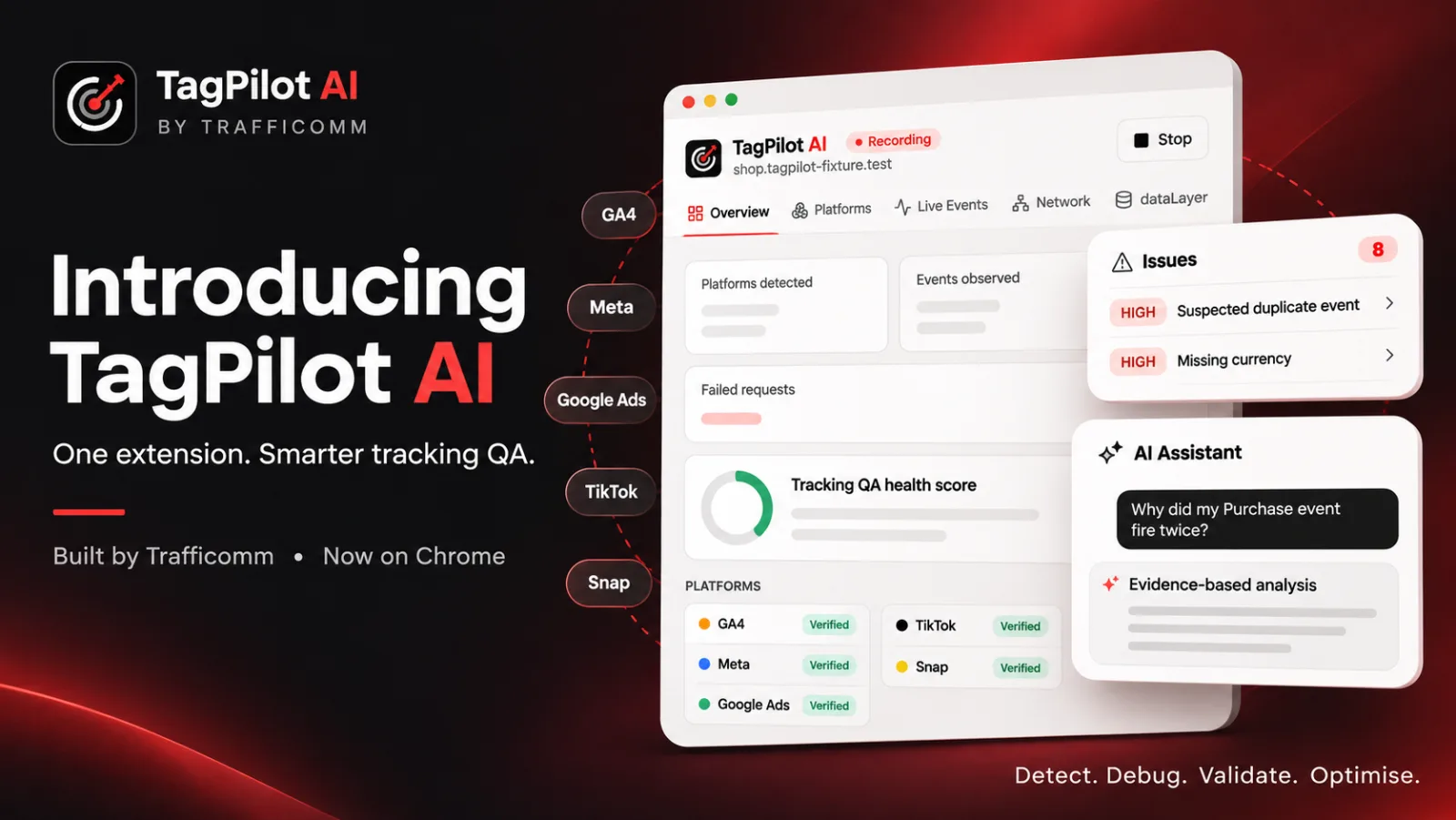
Introducing TagPilot AI: Smarter Tracking QA in Chrome
Meet TagPilot AI, Trafficomm's new Chrome extension that brings pixel debugging, conversion tracking validation and AI-powered troubleshooting into one place.
ReadOutsourced Ad Trafficking: What Agencies Hand Off, and What Stays In-House
Trafficking is the step where an approved plan becomes live delivery. What it involves, what an agency has to hand over before anyone can do it well, and how to keep control when an external team does it.
ReadUAE Digital Advertising Operations: A Practical Guide for Agencies
UAE campaigns meet both sides of the ad stack — the platforms an agency buys on, and the direct and publisher inventory it sells against. What that does to setup, QA, measurement and reporting.
ReadLet's talk operations
Talk to the Operators Behind the Posts.
We'll map where your setup, QA and reporting time goes, and what's worth moving.